
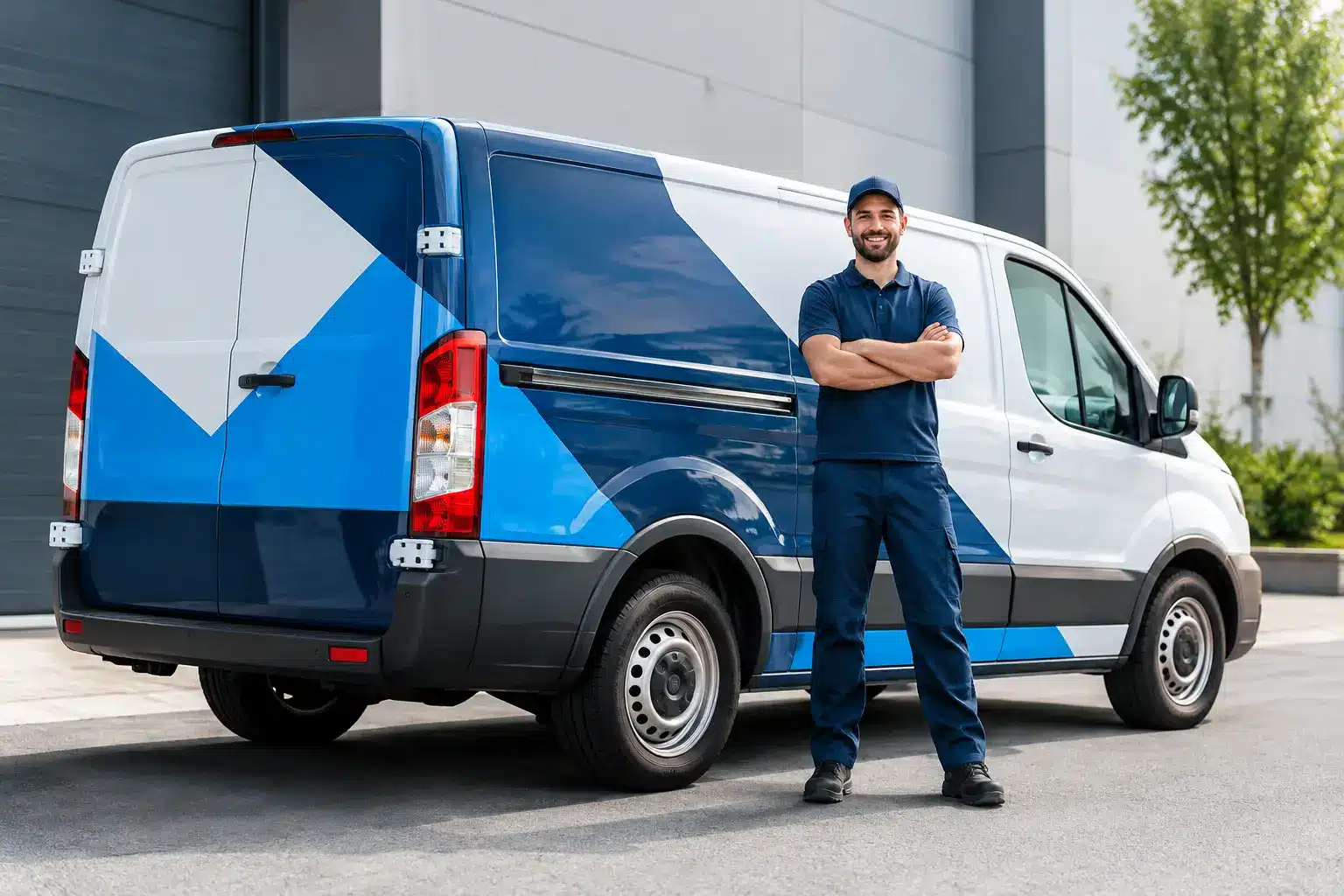
A homeowner may only see your crew for a few minutes at the curb, but your van makes an impression before anyone rings the doorbell. A well-planned service van transformation turns that daily stop into a clear statement about your business: you are established, prepared, and proud of the work you do.
For Charleston contractors, home-service companies, delivery teams, and mobile technicians, a branded van is more than transportation. It is a moving ad that follows your team through neighborhoods, job sites, supply runs, and busy roads. When the design is built for fast recognition instead of visual clutter, it can keep working long after the van leaves the driveway.
What a Service Van Transformation Does for Your Business
A plain white van gets the job done. A wrapped van does more. It puts your name, service category, contact information, and personality in front of the people most likely to need you locally. Someone might not need an electrician, pressure washer, plumber, or HVAC technician today. But after seeing your vehicle around town several times, they are more likely to remember who to call when they do.
Commercial vehicle wraps can generate an estimated 30,000 to 70,000 daily views, depending on where and how often the vehicle travels. Those impressions are not just highway traffic. They include people in neighborhoods where you work, drivers waiting at intersections, nearby business owners, and customers watching you pull into their driveway. Unlike an ad that disappears after a campaign ends, a professionally wrapped service van keeps representing your company on every route.
The strongest benefit is trust. Customers are cautious about inviting unfamiliar service providers onto their property. A clean, professionally branded van helps answer a few questions right away: Is this the company I called? Does this crew look legitimate? Will they take care of the job? It does not replace great service, but it gives your team a more credible introduction.
Build the Design Around Recognition, Not Decoration
The goal of a commercial wrap is not to fit every detail about your business onto the doors. It is to make the important information easy to understand at a glance. A person passing your van has seconds, not minutes, to take it in.
Start with your company name and logo. These should be the most visible elements, especially on the side panels where the van has the biggest uninterrupted canvas. Next, make the service category obvious. If your name does not explain what you do, plain language matters. “Electrical,” “Roofing,” “Mobile Pet Grooming,” or “Lowcountry Landscaping” can be more useful than a clever tagline alone.
Your phone number and website should be readable without crowding the layout. A short, memorable URL is usually easier to absorb than a block of small text. If calls are the priority, give the phone number enough size and contrast to be seen from a reasonable distance. QR codes can have a place on a rear panel or door, but they should support the design, not carry the whole message. Most people will not scan a code while driving behind you.
Color choice also affects how hard your van works. High contrast helps lettering stand out in traffic and in changing light. Bold colors can create instant recognition, while a more restrained palette may better suit a premium home-service brand. There is no single right look. A pest-control company may benefit from bright, friendly graphics, while a commercial security provider might need a cleaner, more technical presentation.
Choose the Right Level of Wrap Coverage
Not every service van needs a full wrap. The right scope depends on your budget, your vehicle’s condition, your existing brand assets, and how aggressively you want to market each vehicle.
A full wrap covers most painted surfaces and creates the biggest visual impact. It is a smart option for newer vans, growing companies, or businesses that want a consistent fleet appearance across several vehicle types. Full coverage also gives the design team the most freedom to create a custom look rather than working around the factory paint color.
A partial wrap uses graphics strategically across key panels, often paired with the van’s original paint color. When designed well, it can still look intentional and high-end. Partial coverage is a strong fit when you want a dramatic upgrade without wrapping every surface.
Spot graphics and cut vinyl are more focused. This approach can include a logo, service information, a phone number, and select design elements. It is practical for companies starting with one van or for vehicles that need a clean, simple branding system. The trade-off is visibility. Smaller graphics can be effective, but they do not command attention in the same way as a full or partial wrap.
The rear doors deserve special attention regardless of the wrap level. Drivers spend time directly behind your van at stoplights and in traffic. That space is ideal for a clear logo, a phone number, a concise service message, and an easy-to-read call to action. Keep it simple enough that it registers in a few seconds.
Plan for How the Van Actually Works
A successful van wrap has to look good on a moving vehicle and hold up to the realities of field work. Before finalizing a design, consider ladders, roof racks, sliding doors, handles, windows, vents, backup cameras, trim pieces, and damage-prone areas. These details affect both the artwork and the installation approach.
Your team’s routines matter too. A plumbing van loaded with tools may have rear doors that are constantly opened and closed. A mobile grooming van may need graphics that complement windows and customer-facing entry points. A catering or food-service vehicle may need bold menu-related visuals while still leaving room for required operational details.
This is why vehicle-specific measurements are so valuable. A design that looks perfect on a digital mockup can feel cramped if it ignores body lines, door seams, or equipment. Charleston Wraps plans custom projects around the actual van, its dimensions, and the intended wrap scope, so the finished graphics feel built for the vehicle rather than pasted onto it.
Protect the Investment With Professional Installation
Vinyl graphics are only as good as the surface preparation and installation behind them. Commercial vans pick up road grime, heat, humidity, rain, and frequent wear around door edges. Proper cleaning, panel preparation, and careful application help the wrap adhere correctly and maintain a polished appearance.
Professional installation also matters for alignment. Crooked lettering, poorly placed seams, bubbles, or graphics that run awkwardly through a door handle can weaken the credibility you were trying to build. A wrap should look sharp from across a parking lot and up close at the customer’s home.
After installation, basic care goes a long way. Wash the vehicle regularly with wrap-safe products, avoid harsh abrasives, and treat stains such as fuel splatter, bird droppings, and tree sap promptly. If a panel is damaged in an accident, a quality wrap system can often allow that section to be replaced without starting over on the entire vehicle.
Make One Van the Start of a Recognizable Fleet
If you operate more than one vehicle, consistency is where the marketing value compounds. Your vans do not need identical graphics, especially when they serve different divisions or carry different equipment. They should, however, share the same visual language: recognizable colors, logo treatment, type style, and overall level of quality.
That consistency helps people connect the dots. The van they saw outside a neighbor’s house becomes the same company they notice on the road and search for later. It also helps your crew look organized when multiple vehicles arrive at a larger project.
A service van transformation works best when it reflects the way you want customers to describe your business before they have even met you. Make it clear, make it memorable, and make sure it looks as dependable as the people stepping out of it.