
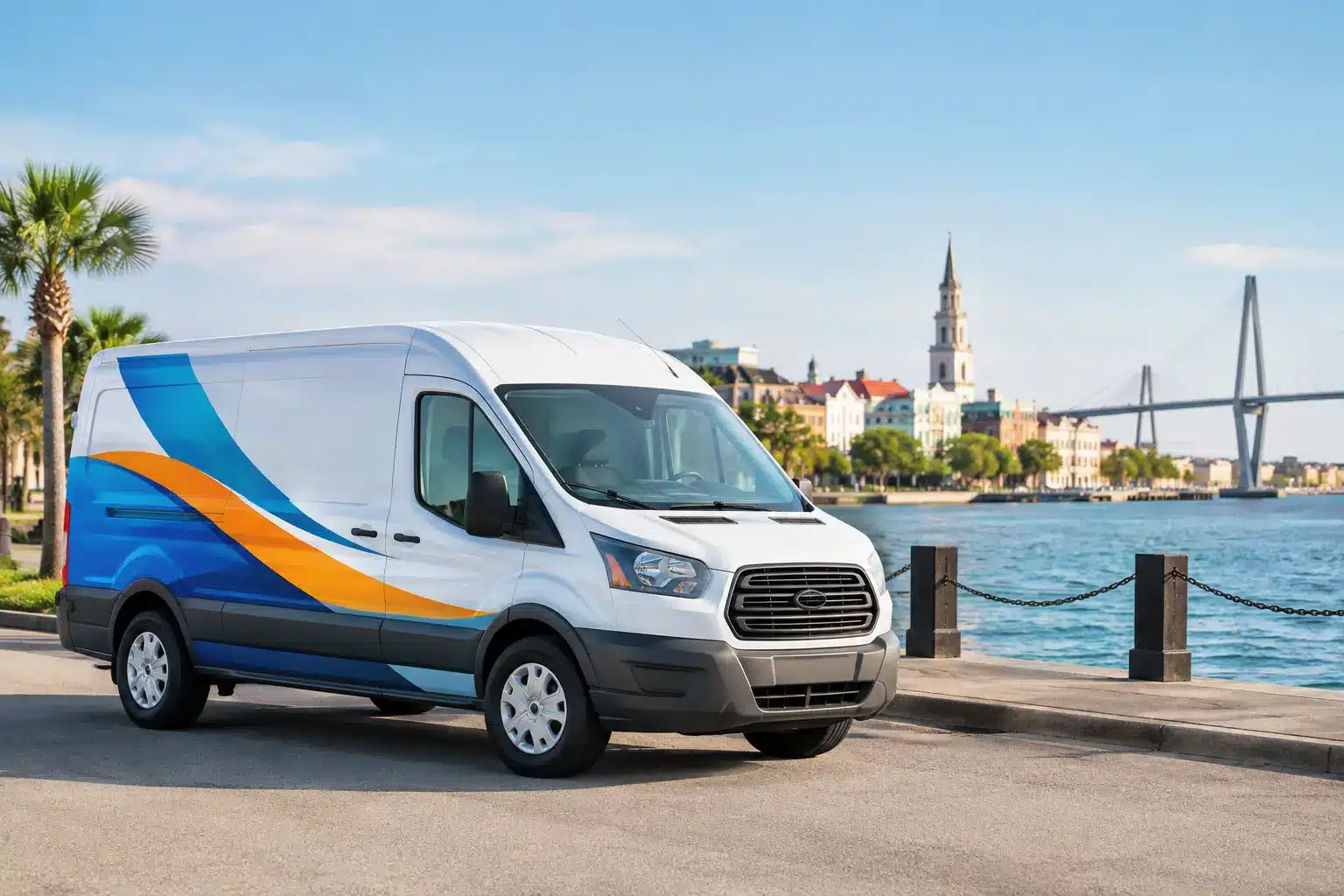
A plain white work van can disappear into Charleston traffic before the light changes. A well-designed branded van does the opposite: it puts your name, service, and personality in front of people on King Street, in West Ashley, at a job site in Mount Pleasant, and in neighborhood driveways all day long. This branded van visibility guide shows how to make those impressions count instead of treating your vehicle like an afterthought.
For contractors, service teams, delivery operators, mobile food businesses, and growing local fleets, a van wrap is not just decoration. It is mobile advertising that works while your team is already on the road. Depending on where and how often your vehicle travels, a wrapped commercial vehicle can generate tens of thousands of views each day. The value comes from being recognizable quickly and remembered when someone needs what you do.
Start With the One Thing You Want People to Remember
A van gives you a large canvas, but that does not mean every inch should be filled with copy. The strongest commercial wraps answer three questions in a few seconds: who are you, what do you do, and how can someone reach you?
Your business name and logo should be easy to spot from a distance. Your primary service should be equally clear. “Electrical,” “HVAC,” “Pressure Washing,” “Catering,” or “Custom Cabinets” may sound simple, but simple is what works when a driver has only a moment to look over.
A phone number, website address, or short call to action can support the design, but choose the contact method your customers actually use. A homeowner seeing your van outside a neighbor’s house may photograph the side panel. A facilities manager may search your company name later. That means your business name must be prominent enough to work even when nobody reads the smaller details.
Design for Movement, Not a Business Card
Van visibility is different from print advertising because people see it while both vehicles are moving. Traffic, weather, parking angles, and distance all change how the design performs. Fine print, busy backgrounds, and too many competing messages can make a wrap look impressive up close but unreadable in real life.
Prioritize contrast. Dark lettering on a light field or light lettering on a dark field generally reads better than two colors with similar brightness. Your brand colors matter, but readability matters more. If a signature color is difficult to see from the road, use it as an accent rather than placing the essential message in it.
Scale matters just as much. Side-panel graphics should be large enough to read from the next lane. Rear-door messaging needs to be clean and direct because it is often viewed from a short distance at stoplights. The back of the van is also one of the best places for a phone number, service area, or simple instruction such as “Call for a Free Estimate.”
Windows, handles, wheel wells, body seams, and sliding doors all affect the layout. A design that looks great on a flat screen can lose its impact if the logo lands across a handle or the main message breaks at a door seam. A professional vehicle-specific proof accounts for those details before production begins.
Use Every Side for Its Job
The two sides of your van do most of the broad-reach work. They should carry the clearest version of your brand and core service. The rear doors should focus on what a driver behind you can absorb in a few seconds. The hood can add brand presence in parking lots, while front-facing graphics can help customers identify you when you arrive.
These areas do not need identical layouts. They need to feel like one brand. Repeating the same logo, color system, and service message builds recognition without making the vehicle feel copied and pasted.
Match the Wrap Scope to Your Business Goal
A full wrap makes a major visual statement. It can transform a standard cargo van into a moving billboard with complete color coverage, custom photography, bold patterns, and high-impact branding. For companies that rely on frequent local travel, operate multiple vehicles, or want a premium market presence, that visibility can be worth the investment.
A partial wrap can be the right move when the van’s existing paint color works with your brand or when you want strong visibility at a lower cost. Strategic graphics on the sides, rear, and hood can create a nearly full-wrap effect without covering every panel. It depends on the vehicle, the design, and how much of the van is visible on your typical routes.
Vinyl lettering and spot graphics are a practical option for businesses that need clean identification rather than a complete transformation. They work especially well for a new company, a single service vehicle, or a fleet that needs consistent logo and contact information across different vehicle models.
The wrong choice is not necessarily the least expensive one. It is the option that leaves your van easy to overlook. A smaller scope can still perform well when the message is bold, the placement is smart, and the design respects the vehicle’s shape.
Build Trust Into the Branded Van Visibility Guide
Visibility gets attention. Trust turns that attention into calls, searches, and quote requests. For service businesses, the van often arrives before the technician knocks on the door. Customers use it as a quick signal that the business is established, professional, and prepared.
A polished wrap helps make that first impression. Clean typography, intentional colors, and consistent branding tell customers that you care about the details. That matters for a plumber, electrician, roofing crew, pest control company, landscaper, cleaning team, or any business entering a customer’s property.
Credibility markers can help, but only when they are selective. A license number, a short claim such as “Locally Owned,” a professional certification, or a concise service-area reference may be useful. Do not stack every badge, review score, and slogan onto the doors. Too much proof can weaken the one message people need to remember.
Make the Van Work on Charleston Routes
Local visibility is built through repetition. A van that appears around the same neighborhoods, commercial corridors, and job sites starts to feel familiar. That familiarity is valuable because people often call the company they have seen before, even if they did not need the service the first time they noticed it.
Think about where your van spends its actual hours. A contractor parked in residential neighborhoods needs a design that reads from sidewalks and driveways. A catering company traveling between venues may need a more polished, photo-friendly look. A food truck or mobile vendor can use larger visual elements and menu-related messaging because people approach it on foot.
Keep the vehicle clean. Road film, faded graphics, damaged panels, and cluttered windows reduce the advertising effect. Premium cast vinyl is made for vehicle use and, with proper care, helps protect the original paint underneath. It is still a working vehicle, so schedule a quick visual check after major jobs, accidents, or any change to your services or phone number.
Avoid the Visibility Mistakes That Cost Calls
Some wrap problems are easy to prevent during planning. Before approving a design, check it against this short field test:
- Can someone identify your business and service from one lane away?
- Does the rear message still make sense while stopped in traffic?
- Are the phone number and key words large enough to photograph or remember?
- Does the design look intentional around doors, handles, windows, and seams?
Also avoid generic stock visuals that could belong to any business in any city. Your van should look like your company, not a template. Original photography, a strong color system, a recognizable icon, or a memorable pattern can help, provided the main message remains easy to read.
Plan the Project Before Production Starts
A better result starts with accurate vehicle information. Share the year, make, model, roof height, wheelbase, door configuration, and current condition of the van. If your vehicle has dents, peeling paint, rust, aftermarket accessories, or existing graphics, address those early. Vinyl conforms to the surface underneath it, so preparation affects the finished appearance.
Bring your logo files, brand colors, preferred wording, and examples of designs you like. Then be ready to narrow the focus. A good wrap design is not a catalog of every service you offer. It is a clear invitation for the right customer to learn more.
Charleston Wraps can help turn those details into a made-to-order van wrap built for your vehicle and your market. The goal is not simply to cover panels with vinyl. It is to create a branded vehicle people recognize before they need you, then remember when they do.
Your van already travels the streets where your next customers live and work. Give it a message bold enough to earn a second look, clear enough to earn a search, and professional enough to make that first call feel easy.