
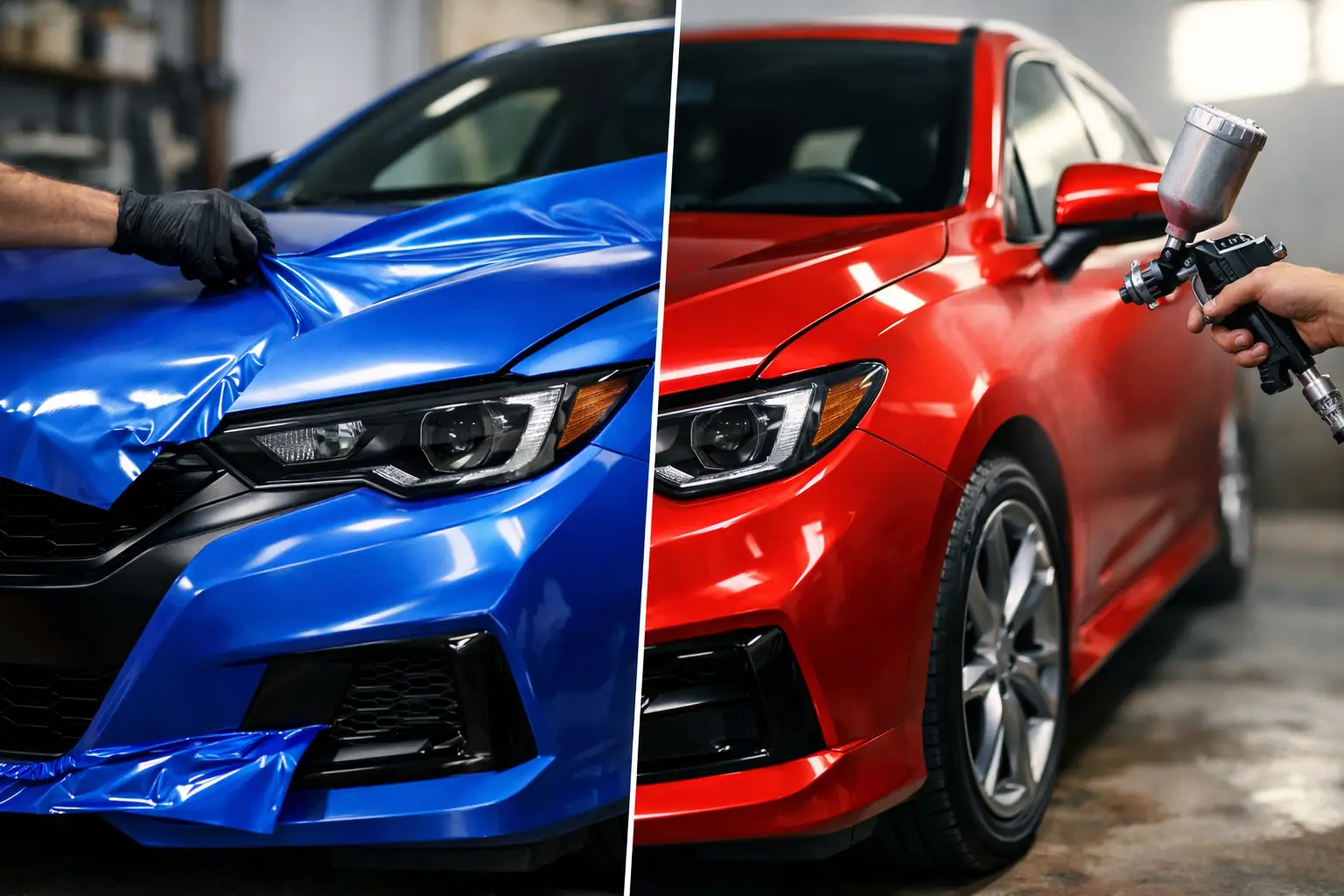
A work truck with faded lettering is not just an older vehicle. It is a missed chance to put your name in front of Charleston drivers all day. A personal vehicle with tired paint has a different problem: it no longer feels like yours. In the car wrap vs paint decision, the right answer depends on what you need the finish to do – build your brand, change your look, protect original paint, or restore a damaged surface.
Paint and vinyl wraps can both create a dramatic transformation. But they are not interchangeable. One is a permanent refinishing process. The other is a customizable film installed over properly prepared paint. Before you choose, consider the vehicle’s condition, how long you plan to keep the look, your budget, and whether flexibility matters.
Car Wrap vs Paint: The Core Difference
A paint job changes the vehicle itself. The existing finish is repaired, sanded, primed, and sprayed with a new color. Done well, it can look exceptional and last for years. It is often the practical choice when paint has failed, corrosion needs to be addressed, or bodywork is part of the project.
A vinyl wrap changes the surface appearance without permanently replacing the factory finish. Premium wrap film can cover a vehicle in gloss, satin, matte, metallic, color-shifting, textured, or printed finishes. It can also carry a full commercial design, from a clean logo layout to bold images that turn a van, truck, trailer, or food truck into a rolling billboard.
That distinction matters. Paint is a long-term alteration. A wrap gives you room to change direction later, whether that means rebranding a fleet, updating a service area, refreshing a personal color change, or returning a leased vehicle closer to its original appearance.
Cost: Compare the Whole Project, Not Just the Quote
It is tempting to ask which option costs less, but the honest answer is: it depends on the vehicle and the result you expect. A basic paint job and a premium wrap installation are not equal comparisons. Neither are a high-end custom paint job and a simple one-color wrap.
Quality paintwork can become expensive quickly when the vehicle needs dent repair, rust treatment, panel blending, trim removal, or a specialty finish. A proper repaint also requires significant prep work and controlled conditions. If the goal is to restore damaged paint or correct body issues, that investment may be worth it.
For a vehicle in good condition, a wrap can deliver a major visual change without the cost and permanence of a full repaint. Commercial clients also need to consider what the vehicle can earn for the business. A branded truck, van, trailer, or fleet vehicle can generate 30,000 to 70,000 daily views while it is parked at a job site, moving through town, or sitting in traffic. That is advertising you already own and operate.
The lowest price is rarely the best value in either category. Thin film, rushed installation, weak artwork, poor surface prep, or bargain paint can create a finish that looks rough long before it should. Ask what is included: design, material, prep, installation, coverage area, and any removal requirements should all be clear before work begins.
Appearance and Customization
Paint gives you depth and permanence. For an enthusiast restoring a classic vehicle or pursuing a factory-style finish, paint may be the natural route. A skilled painter can repair imperfections and create effects that are difficult to duplicate with film.
Wraps win on range and speed of visual customization. You can select a solid color that makes your vehicle look factory-fresh, choose a satin black chrome delete, add racing stripes, or create a full custom graphic package. For businesses, vinyl allows every panel to work harder. Your logo, phone number, services, colors, and messaging can be designed around the vehicle’s actual body lines instead of squeezed into a small decal.
This is especially useful for tradespeople and mobile businesses. A plain white van may get you to the next appointment, but a professionally wrapped van helps customers recognize who has arrived. For food trucks and trailers, the exterior can set expectations before anyone sees the menu. For fleet operators, consistent wraps make multiple vehicles look like one organized, established brand.
A wrap also makes seasonal campaigns and evolving brands more realistic. If your company expands services, changes its logo, adds a new location, or wants a fresh event look, you are not locked into repainting the entire vehicle again.
Protection: What Each Option Can and Cannot Do
A quality vinyl wrap adds a protective layer over the paint underneath. It can help shield factory paint from minor scuffs, light scratches, UV exposure, and everyday road wear. When removed correctly, a wrap can reveal the original finish in better condition than an uncovered vehicle of the same age.
That does not mean a wrap repairs bad paint or hides every flaw. Vinyl follows the surface beneath it. Deep scratches, peeling clear coat, rust, dents, and rough repairs can show through or prevent proper adhesion. Those issues should be corrected before installation. A wrap is a finish, not body filler.
Paint protection film is a separate option worth considering for owners focused on defense rather than a color change. Clear protective film is designed for vulnerable areas such as front bumpers, hoods, mirrors, rocker panels, and door edges. It is a strong fit for new vehicles, performance vehicles, and daily drivers that face gravel, bugs, road debris, and tight parking lots.
Fresh paint needs protection too. It is exposed directly to sun, contaminants, chips, and scratches unless you add a protective film or coating. If preserving the factory finish is part of your goal, a wrap or paint protection film offers an advantage over repainting for purely cosmetic reasons.
Durability and Maintenance in Charleston Conditions
Charleston heat, humidity, sun, salt air, and summer storms are real considerations. Both paint and wraps need care, especially if the vehicle spends most of its time outdoors.
Modern automotive paint can last a long time when it is properly applied and maintained. It is still vulnerable to fading, chips, scratches, and environmental damage. Neglected paint can lose its shine and require correction work down the road.
A professionally installed premium wrap can also provide years of strong performance, but its life depends on material quality, installation, climate exposure, vehicle use, and maintenance. A garage-kept personal car will generally have an easier life than a contractor truck parked outside every day. Horizontal areas such as hoods and roofs take more direct sun and often show wear first.
Keep either finish clean. Hand washing with appropriate products is the safest approach. Remove bird droppings, tree sap, bugs, fuel spills, and salt residue promptly. Avoid aggressive brushes and harsh chemicals. If you use a pressure washer, keep the spray moving and stay away from film edges. Good maintenance is not complicated, but it protects the investment.
When Paint Is the Better Choice
Choose paint when the vehicle has extensive paint failure, rust, collision damage, or bodywork that must be repaired first. It also makes sense when you want a permanent restoration, need exact paint matching across repaired panels, or own a vehicle whose value depends on a traditional painted finish.
A full repaint may also be the better answer if the existing finish is so compromised that vinyl cannot adhere reliably. No installer should promise a flawless wrap over peeling clear coat or unstable paint. Fixing the foundation comes first.
When a Wrap Is the Better Choice
A wrap is a strong choice when the paint is in sound condition and you want impact without permanence. It works especially well for color changes, custom designs, commercial branding, fleet consistency, short-term promotions, and leased vehicles.
For business owners, the biggest advantage is that the vehicle becomes an active marketing asset. Unlike an ad that disappears after a campaign ends, a wrapped vehicle keeps working between jobs, on deliveries, in parking lots, and around town. Clear design matters here. A wrap should be easy to recognize at a glance, not overloaded with tiny text nobody can read from the next lane.
At Charleston Wraps, every project starts with the real-world details: vehicle type, dimensions, coverage level, design goals, and how the vehicle will be used. That planning helps determine whether a partial wrap, full wrap, color change, graphics package, or protective film is the better investment.
The best finish is the one that matches the job. Repair and restore when the paint itself is failing. Wrap when you want a bold new look, paint preservation, or a vehicle that puts your business in front of more people every day.