
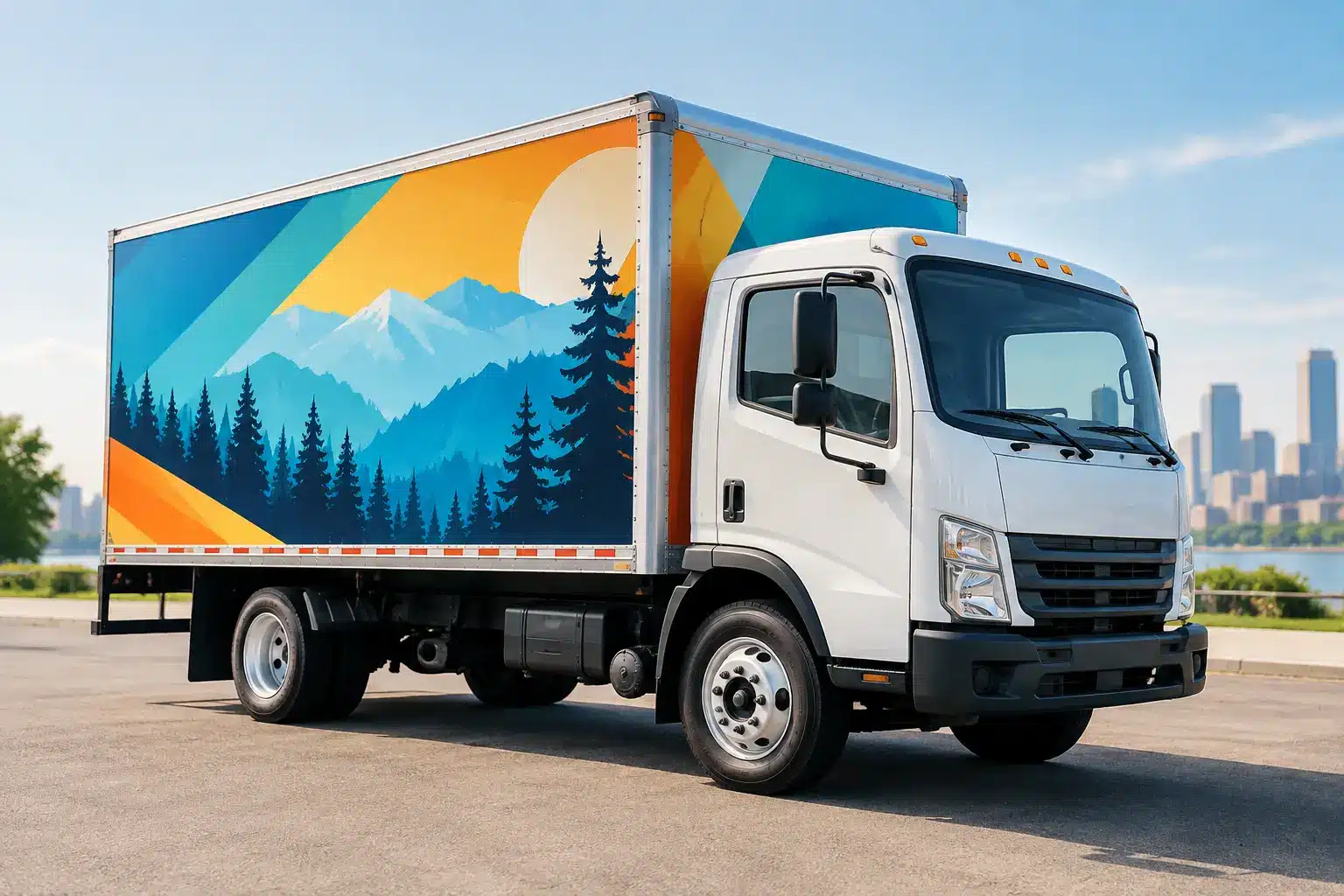
A box truck gives your brand something most advertising cannot: a large, moving canvas that works every time the truck leaves the lot. The best box truck wrap layouts do more than cover white panels with a logo. They make your company recognizable at a glance, explain what you do in seconds, and give people a clear next step before the light turns green.
For Charleston contractors, delivery businesses, caterers, restoration crews, retailers, and mobile service providers, the layout matters as much as the wrap itself. A great design can turn routine trips across the Lowcountry into 30,000 to 70,000 potential daily views. A cluttered one can disappear into traffic, even with premium materials and bold colors.
What Makes a Box Truck Wrap Layout Work?
Box trucks offer generous square footage, but more space does not mean every inch needs a message. Drivers, pedestrians, and nearby vehicles see your truck in short bursts. Your wrap has to communicate fast from different angles, at different distances, and sometimes while the truck is moving.
The strongest layouts create a clear visual hierarchy. Your company name or logo should be the first thing people notice. Your primary service should come next, followed by one easy contact point, such as a phone number or website. Everything else is supporting detail.
Think of each side of the truck as a billboard with a three-second deadline. If a passerby cannot tell who you are and what you offer from a reasonable distance, the layout needs simplifying. Small paragraphs, crowded service lists, thin type, and too many competing graphics make a large truck feel surprisingly hard to read.
Color contrast is equally important. A dark logo on a dark photo may look sharp on a computer screen, then vanish on a cloudy Charleston afternoon. High-contrast combinations, large lettering, and clean negative space help the message hold up on busy roads, under tree cover, and in parking lots.
Best Box Truck Wrap Layouts for Local Visibility
The right layout depends on your business, how the truck is used, and where it spends most of its time. A truck making residential service calls needs a different approach than one parked at events or loading outside a downtown retail location.
The Bold Brand Block
This is the cleanest choice for businesses that need instant name recognition. A dominant brand color covers much of the box, while an oversized logo and short service line carry the message. A roofing company, HVAC provider, moving company, or plumbing contractor can make a major impression with this approach.
Keep the copy tight. A line such as “Heating, Cooling & Plumbing” is easier to absorb than a full list of every service you offer. The goal is not to explain your entire operation from the street. The goal is to make your name familiar enough that customers remember who to call later.
This layout also works well for fleets because it is easy to repeat across multiple trucks, vans, and trailers. Consistency builds trust. When people repeatedly see the same colors, logo treatment, and message around Charleston, they begin to recognize the brand before they need the service.
The Hero Image Layout
Some businesses sell an experience, a finished result, or food that needs to look irresistible. For those brands, a large, professionally produced image can do the heavy lifting. Landscapers may feature a polished outdoor space. A pet grooming business might use an expressive dog portrait. Food operators can use one high-impact menu image instead of a collage of ten items.
The trade-off is readability. Photography adds energy, but it can compete with your logo and contact details. Place type over quieter areas of the image, use solid color panels where needed, and resist shrinking the logo to make room for more visuals. The image should support the brand, not swallow it.
The Service-First Layout
If your company name does not immediately explain what you do, lead with the service. This is often the right move for specialized trades, restoration companies, commercial cleaning teams, and local delivery operations. The largest line might be “Water Damage Restoration,” “Commercial Kitchen Delivery,” or “Custom Cabinet Installation,” with your logo positioned prominently nearby.
A service-first layout helps a new business get understood faster. It is especially useful when the truck spends time in neighborhoods where potential customers may not already know the brand. Once recognition grows, you can shift future vehicles toward a more logo-led design.
The Rear-Door Call to Action
The rear of a box truck is prime real estate because drivers can spend several minutes behind it in traffic. It deserves its own layout, not leftover graphics from the side panels. Use the rear for one direct action: a phone number, a short website address, a QR code, or a simple message such as “See Our Work” or “Order Catering.”
Keep the QR code large, high contrast, and away from handles, hinges, reflectors, and door seams. It should be a bonus, not the only way to reach you. Many people will not scan a code while driving, but they may remember a bold phone number, web address, or brand name.
Design Around the Truck, Not Just the Template
A box truck is not a flat rectangle. Roll-up doors, latches, fuel doors, marker lights, rub rails, wheel wells, and panel seams all affect the final design. A logo that looks centered on a digital template can be broken apart by a door handle or disappear around a corner after installation.
That is why measurement and vehicle-specific planning matter. The side box panels may be the star of the wrap, but the cab, hood, and rear doors should feel connected. A wrap that stops abruptly at the cab can look like two separate vehicles. Extending key colors, patterns, or graphic elements forward creates a more intentional presence without forcing every surface to carry the same amount of information.
Also consider how the truck is viewed when parked. If it backs into job sites, loading areas, or event spaces, the rear doors may receive more attention than the passenger side. If it is frequently parked curbside, one side may be more visible to foot traffic. Your daily routes should shape the hierarchy of the design.
Common Layout Mistakes That Cost Attention
The most common mistake is treating the truck like a brochure. A box truck can fit a lot of text, but people should not have to read a lot of text to understand it. Save detailed service descriptions, testimonials, and long mission statements for your website or sales materials.
Another mistake is using too many type styles. One strong display font for the main message and one highly legible font for supporting details is usually enough. Decorative lettering may match a brand personality, but it has to remain readable from the road.
Poor logo placement is another missed opportunity. Placing a small logo low on the box, close to wheel wells, or over an active background wastes the highest-value space. Give the mark room to breathe, and position it where drivers can see it without effort.
Finally, avoid designing only for daylight. White type may look crisp on a mockup, then lose impact under glare. Reflective accents, carefully selected finishes, and strong contrast can improve visibility when conditions change. The right choice depends on the vehicle’s routes, budget, and brand style.
Turn Every Route Into a Recognizable Brand Moment
The best box truck wrap is built around one clear question: what should someone remember after seeing this truck for three seconds? For most businesses, the answer is your name, your service, and how to find you. Build the layout around that answer, then let color, imagery, and vehicle-specific details make it unmistakably yours.
Charleston Wraps helps local businesses turn box trucks into high-impact mobile advertising with custom design, premium production, and professional installation. Bring your truck dimensions, brand assets, service priorities, and typical routes to the planning process. The result should not just look good at pickup – it should keep earning attention every mile it travels.