
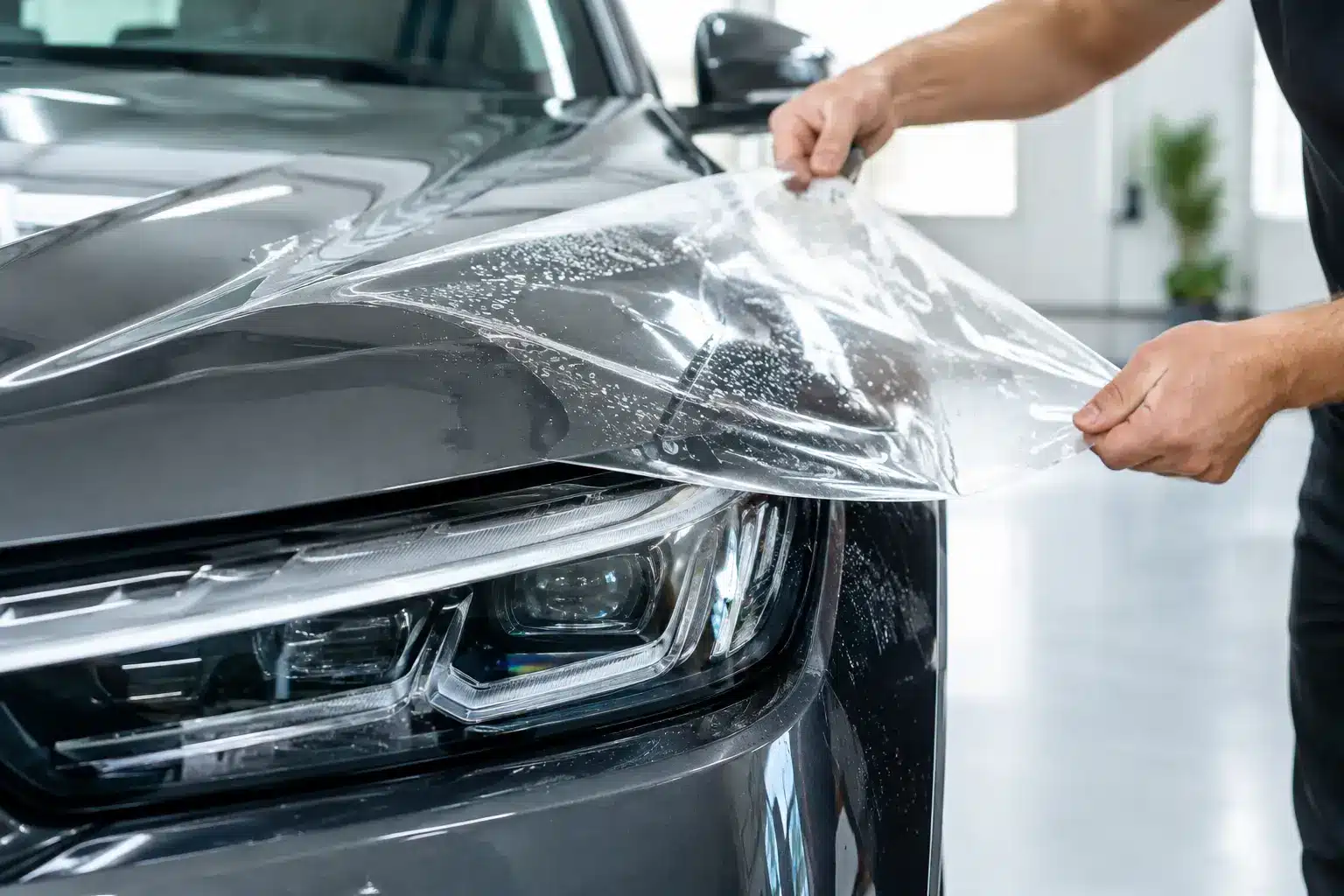
A fresh paint finish can lose its edge faster than most drivers expect. One highway commute behind a gravel truck, a tight parking lot, or a weekend run to the beach can leave small chips, scuffs, and scratches in the areas that take the most abuse. This clear bra film review looks at what paint protection film actually does, where it earns its price, and when it may be more protection than your vehicle needs.
Clear bra is the familiar name for paint protection film, often called PPF. It is a transparent urethane film professionally applied over painted surfaces to absorb the impact of road debris and reduce damage that would otherwise hit the paint directly. Done well, it is hard to see. Done poorly, it can become the first thing you notice on the vehicle.
What a Clear Bra Film Is Built to Protect
Paint protection film is not a cosmetic cover-up. It is a physical barrier designed for the high-impact sections of a vehicle: the front bumper, hood, fenders, mirrors, rocker panels, door edges, and the area behind the rear wheels. These are the panels that see flying rocks, bugs, road grit, salt, sand, brush, and careless shoes getting in and out.
Modern premium films are thick enough to take the hit while remaining flexible enough to follow a vehicle’s curves. Many include a self-healing topcoat. On minor surface marks, warmth from the sun or hot water can help the film level back out. That does not mean every scrape disappears, but it makes a real difference with light wash marring and everyday swirl marks.
For Charleston-area drivers, the use case is especially practical. Coastal sand, frequent rain, pollen, strong sun, and road construction all add up. A truck that spends its days on job sites and highways faces a different kind of wear than a garage-kept weekend car, but both can benefit from protecting the paint that takes the hardest hits.
Clear Bra Film Review: The Real Advantages
The biggest advantage is simple: paint protection film helps keep the original paint in better condition. That matters when you want your vehicle to continue looking sharp, when you have invested in a custom color, or when resale value is part of the equation.
The front bumper is usually the first panel worth protecting. It sits low, leads the vehicle into every mile, and catches debris from traffic ahead. A bumper with a collection of rock chips can make an otherwise clean vehicle look tired. Film helps prevent that slow accumulation of damage.
PPF also protects in ways that are harder to photograph. Rock chips can expose paint and create a starting point for corrosion, especially on metal panels. Film does not eliminate all risk, but it reduces the chances that routine driving turns into paint correction or body-shop work later.
There is also a visual benefit beyond protection. High-gloss film can preserve the clarity and depth of a factory or custom paint color. Matte or satin PPF can change the finish of a gloss-painted vehicle without permanently repainting it. That makes it a strong option for drivers who want a more aggressive look while still keeping the original color underneath.
A quality installation is also removable. When the film reaches the end of its useful life, a trained installer can remove it without harming healthy factory paint. That is an important distinction. Clear bra film is designed to be a sacrificial layer, not a permanent coating bonded to the vehicle forever.
Where PPF Has Limits
A good review should be clear about the trade-offs. Paint protection film is highly effective, but it is not armor plating. A sharp impact, deep gouge, collision, or aggressive scrape can still damage the film and the paint beneath it. Its purpose is to reduce everyday wear and absorb common road hazards, not make a vehicle invincible.
It also will not fix existing damage. Chips, oxidation, deep scratches, and poor prior repairs should be addressed before installation whenever possible. Film placed over rough paint can preserve the flaw underneath and may make its edges more visible.
The final appearance depends heavily on the product and installation. On light-colored vehicles, a clean installation can be nearly invisible. On darker colors, certain panel edges or seams may be visible under close inspection, particularly around complex bumpers and body lines. An experienced installer plans coverage around those details, wraps edges where appropriate, and uses precise patterns or custom trimming to create the cleanest result possible.
There is a cost consideration, too. Full-front protection costs more than a small partial hood package because it covers more material, more complex panels, and more installation time. A full-body application is a premium investment. It makes the most sense for high-value vehicles, new vehicles you plan to keep, vehicles with difficult-to-replace paint, or owners who want maximum protection with a finish change.
Full Front, High-Impact Areas, or Full Body?
Coverage should match how you use the vehicle, not just what looks good in a package description. A daily-driven SUV that sees interstate miles may need a full front end: bumper, full hood, full fenders, mirrors, and headlights. That protects the leading edge of the vehicle where chips are most likely to happen.
A work truck may benefit from full-front coverage plus rocker panels and lower doors. Those lower sections often take abuse from gravel, mud, equipment, and repeated entry. For sports cars and low vehicles, extended rocker coverage is especially valuable because the tires can throw debris directly into the side panels.
Full-body PPF is the top-tier option for owners who want to protect nearly every painted surface. It is popular for luxury vehicles, performance cars, custom-painted builds, and matte or satin finish conversions. It is also the most comprehensive route for drivers who want to keep a new vehicle looking new for as long as possible.
Partial-front kits can cost less, but they introduce a visible line across the hood or fenders. For a budget-conscious vehicle owner, that can be an acceptable trade-off. For a cleaner, more integrated look, full panels are typically the better choice.
Film Finish and Quality Matter
Not all clear bra films perform the same way. Premium PPF is engineered for clarity, stain resistance, UV stability, and self-healing performance. Lower-grade films can yellow, haze, stain, or show premature wear, especially under hard sun and inconsistent maintenance.
Gloss PPF is the choice for preserving a glossy factory finish. Matte and satin films offer a different visual direction, muting reflections and giving a vehicle a more custom, refined appearance. Colored paint protection film is another option for certain projects, combining color change with impact protection, though it requires thoughtful planning around coverage, edges, and repair needs.
Ask what film is being used, what warranty supports it, and how the installer handles complex areas. The answer should be specific. A professional shop should be able to discuss panel coverage, seams, wrapped edges, curing expectations, care instructions, and what to expect from the finished vehicle.
Installation Is the Difference You Can See
Paint protection film is only as good as the surface preparation and installation behind it. Before film is applied, the paint should be thoroughly cleaned and decontaminated. Depending on the vehicle, light paint correction may be recommended to remove swirls or defects that would otherwise remain visible beneath the film.
During installation, the film needs to be positioned cleanly, stretched correctly, and finished carefully around edges, sensors, badges, and body contours. A rushed job can leave contamination, lifting edges, distortion, or obvious cut lines. Those issues are not just cosmetic. Edges that do not bond properly are more likely to collect dirt or lift over time.
Charleston Wraps approaches PPF as both a protection service and a finish-driven custom project. Whether the goal is a protected work truck, a clean daily driver, or a satin performance build, the coverage should be built around the vehicle, its condition, and the way it will be used.
Care After Clear Bra Installation
Once the film has had time to cure, routine maintenance is straightforward. Wash the vehicle regularly using pH-balanced automotive soap and clean microfiber towels. Remove bug residue, bird droppings, and tree sap promptly, because leaving contaminants on any exterior surface for too long can cause staining or etching.
Avoid blasting high-pressure water directly at film edges from very close range. Automated car washes with abrasive brushes are also a poor choice, not only for PPF but for paint in general. Touchless washing or careful hand washing is the safer route.
Ceramic coating can be applied over many paint protection films to improve water behavior and make cleaning easier. It is not a replacement for PPF. Coating helps with gloss, cleaning, and light chemical resistance, while film is the layer that provides meaningful impact protection. They work well together when the vehicle and budget justify both.
The right clear bra film package is not necessarily the biggest one. It is the coverage that protects the surfaces your vehicle puts on the line every day, while keeping the finish looking like you meant to keep it.