
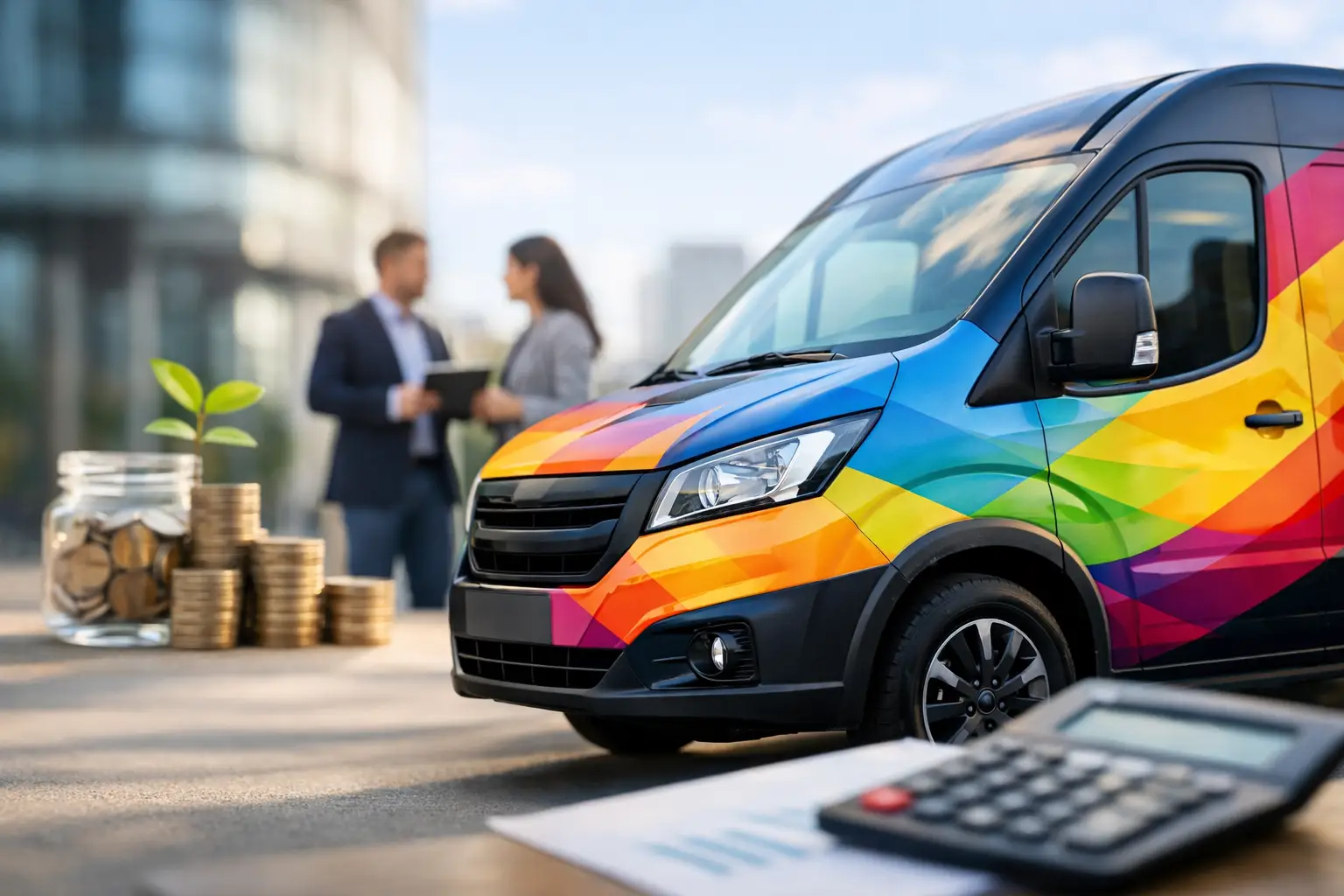
A work truck sitting at a job site, a van moving through Mount Pleasant, or a food trailer parked at a Charleston event can do more than get the job done. It can put your name, services, and phone number in front of local customers all day. Vehicle wrap advertising ROI comes down to one question: does that visibility create enough recognition, calls, and booked work to justify the investment?
For many local businesses, the answer is yes, especially when the vehicle already spends its day on the road. Unlike an ad campaign that disappears when the budget runs out, a professionally installed wrap keeps working through service calls, deliveries, commutes, parking lots, and neighborhood traffic. The key is treating it as a measurable marketing asset, not just a good-looking vehicle.
What Vehicle Wrap Advertising ROI Really Measures
Return on investment is not limited to a single phone call that came directly from a truck wrap. Commercial vehicle branding often works earlier in the buying process. A homeowner may see your plumbing van three times before searching for a plumber. A restaurant owner may notice your branded box truck before asking for a catering quote. When the need arrives, the business they recognize has an advantage.
That makes vehicle wrap advertising ROI a mix of direct response and long-term local familiarity. You can measure direct results through calls, form submissions, QR code scans, landing-page visits, and promo codes. You can also measure the less immediate value through branded search activity, customer surveys, repeat exposure in target neighborhoods, and the number of people who say, “I see your trucks everywhere.”
A simple calculation helps put the investment in perspective:
ROI = (revenue generated from the wrap – total wrap cost) / total wrap cost x 100
If a $4,500 full van wrap helps generate $18,000 in additional gross profit over its useful life, the return is substantial. But the calculation should be honest. Include design, installation, vehicle downtime, any repairs, and the time your team spends handling added leads. Then compare that cost to other ways of reaching the same local audience.
Why Wrapped Vehicles Can Deliver Strong Local Value
A commercial wrap is particularly effective because it reaches people where local buying decisions happen: on Charleston roads, outside homes, near job sites, around retail centers, and at community events. Your audience does not have to seek out the ad. The ad arrives in their line of sight.
Industry estimates often place a wrapped vehicle’s daily impressions between 30,000 and 70,000, depending on its route, market, vehicle size, and time on the road. A contractor’s truck running a busy route from West Ashley to Daniel Island will not perform the same way as a vehicle that stays parked behind a warehouse. Mileage and visibility matter.
There is also a credibility factor that is difficult to buy with a small digital ad. A clean, consistent fleet signals that a company is established, organized, and ready to serve the area. For trades, home services, food operators, delivery businesses, and mobile brands, that visual confidence can influence who gets the first call.
The wrap itself can last for years with proper care, spreading the cost across thousands of miles and repeated impressions. That durability is a major part of the value equation. A radio spot runs once. A wrapped truck is seen on the way to every appointment.
The Factors That Affect Your Return
Not every wrap produces the same result. A high-impact design on a vehicle that rarely leaves the lot will have limited reach. A heavily driven truck with a cluttered design can create impressions without creating action. Strong results come from connecting the vehicle, the design, and the business goal.
Your routes and vehicle use
Start with where the vehicle goes. Service vehicles often have an advantage because they travel through the exact neighborhoods where customers live. Food trucks and trailers gain concentrated exposure at festivals, office parks, breweries, and events. A box truck can create major awareness on busy corridors, but may need a clearer call to action because viewers have only a few seconds to take in the message.
Think about the audience you want, not just the number of cars that pass by. A landscaping company that works primarily in Kiawah, James Island, and Mount Pleasant should evaluate how often its branded vehicles appear in those areas. Relevant impressions are worth more than random ones.
Design clarity
The best vehicle wraps do not try to say everything. Drivers and pedestrians need to understand your business quickly. Your logo, core service, phone number or website, and a memorable visual hierarchy should be easy to read at a glance.
A full wrap offers maximum visual impact, but partial wraps, spot graphics, and branded decals can also deliver excellent value when the budget or vehicle type calls for a more focused approach. For a growing business with several work vehicles, a consistent partial-wrap system may create better fleet-wide recognition than fully wrapping only one truck.
Avoid shrinking every service into tiny text. “Roofing, gutters, siding, windows, repairs, inspections, pressure washing” may be accurate, but it is not readable at 45 miles per hour. Lead with the service that drives your best jobs. Let your website and sales team handle the details.
A clear next step
Recognition is valuable, but response improves when people know what to do next. Depending on your business, that could be a phone number, a short web address, a QR code placed where parked viewers can scan it, or a simple message such as “Free Estimates” or “Book Your Event.”
QR codes are useful, but they should not be the only contact option. A person driving beside your vehicle cannot safely scan one. Make your business name and primary way to reach you visible without requiring extra effort.
Installation quality and maintenance
A wrap is a public-facing representation of your company. Poor panel alignment, lifting edges, faded graphics, or a dirty vehicle can work against the brand you are trying to build. Premium materials, experienced installation, and basic care protect both the wrap and the impression it makes.
Road conditions, sun exposure, vehicle storage, washing habits, and the complexity of the body panels all affect longevity. There is a trade-off between the lowest upfront quote and a wrap that still looks sharp after years of Charleston heat, humidity, rain, and daily driving.
How to Track Results Without Guesswork
You do not need a massive marketing department to measure a vehicle wrap. You need a plan before the wrap hits the road. First, establish a baseline for the metrics that matter: monthly calls, quote requests, branded web searches, booked jobs, average sale value, and lead source reports.
Then give the wrap a way to be identified. Use a dedicated phone extension, a memorable campaign URL, a unique QR code, or a specific offer such as “Mention the truck for a free site visit.” Train your office team to ask every new caller how they heard about you. Keep the answer choices simple, including “saw your vehicle.”
Review the numbers over several months, not one slow week. Vehicle advertising builds through repetition, and seasonal businesses have natural swings. Compare results against the same period last year when possible. If a new service area receives regular vehicle exposure and branded calls rise there, that is meaningful evidence even if every caller did not use a promo code.
For fleets, track results by territory or vehicle type. A service van assigned to residential work may create more leads than a larger vehicle with greater traffic exposure because it appears in front of likely buyers. The goal is not simply to collect impressions. It is to produce profitable attention.
Choosing the Right Wrap Scope for Your Business
A full wrap makes the boldest statement and is often the right choice for food trucks, trailers, high-mileage vans, and businesses that need instant recognition. It turns the entire vehicle into a moving billboard and gives design room for large imagery, bold color, and clear messaging.
Partial wraps and graphics are smart options when a full wrap is not necessary. They can highlight doors, bedsides, rear panels, trailers, or key vehicle surfaces while keeping costs lower. This approach works well for contractors building a consistent fleet or businesses that want professional branding across several assets.
The right scope depends on your goals, budget, fleet size, and how the vehicle is used. A busy plumbing van may deserve a full wrap because it is seen daily in residential neighborhoods. A manager’s lightly used SUV may only need door graphics and a clean identification package. Both can support the brand when designed with purpose.
Charleston Wraps approaches each project around the actual vehicle, route, and message you need to put in front of the market. That means considering trucks, vans, trailers, box trucks, food units, and specialty vehicles as different advertising surfaces, not one-size-fits-all templates.
Your vehicle is already traveling through the communities you serve. Give those miles a job: make your name recognizable, make your offer clear, and make it easy for the next customer to remember who to call.