
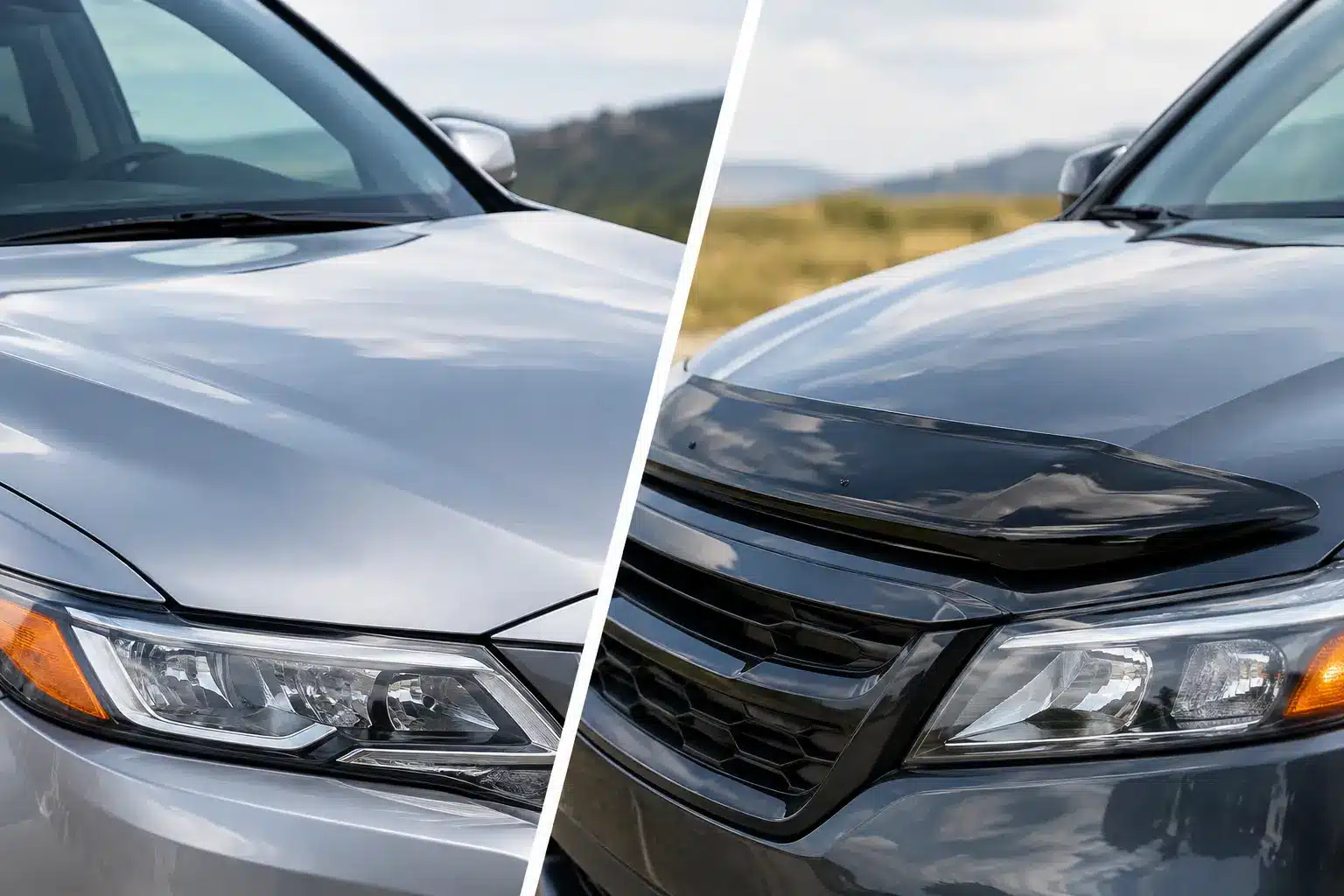
A single stretch behind a gravel truck on I-26 can leave a new hood with the kind of chip you notice every time you walk up to the vehicle. That is why the paint film versus hood deflectors decision matters long before damage shows up. Both options aim to protect the front end, but they do it in very different ways – and one may fit your vehicle, driving routine, and desired look far better than the other.
Paint Film Versus Hood Deflectors: The Big Difference
Paint protection film, often called PPF or clear bra, is a transparent urethane film installed directly over painted surfaces. It takes the hit from loose gravel, sand, road debris, insects, and everyday abrasion while preserving the factory lines of the vehicle. On a truck, SUV, car, or van, it can cover only the leading edge of the hood or extend across the full hood, bumper, mirrors, fenders, rocker panels, and other high-impact areas.
A hood deflector is a raised acrylic or polycarbonate accessory mounted along the front edge of the hood. It changes airflow over the vehicle to help push some bugs, dust, and small debris upward and away from the windshield. It also creates a physical barrier at the hood’s leading edge.
The key distinction is simple: PPF protects the paint where it is applied. A deflector tries to redirect what reaches the vehicle while covering a narrow strip of the hood. Neither is automatically the right answer for every driver.
Why Paint Protection Film Delivers More Complete Coverage
If your main concern is rock chips, road rash, and maintaining clean paint, PPF is usually the stronger protection choice. The front bumper, hood, fender edges, and mirror caps are all exposed to direct impacts. A deflector can help with airflow, but it cannot shield the bumper from a stone kicked up by a passing vehicle or protect the fenders from grit thrown by your own tires.
Quality paint film is nearly invisible when professionally installed. That matters on a newer vehicle, a custom color, or a truck you want to keep looking sharp for years. It protects without changing the body profile, which is a major advantage for owners who love the original design of their vehicle.
Many premium films also have self-healing properties. Light surface scratches and swirl marks can become far less visible with heat from the sun or warm water. The film will not repair a deep gouge or stop a major collision, but it is built for the normal punishment of highway driving, parking lots, and busy job sites.
PPF is also flexible. A Charleston commuter may choose a partial hood and mirror package. Someone who regularly drives to construction sites, launches a boat, or racks up interstate miles may want a full front-end package. The protection can be matched to the areas that actually take the abuse.
Where Hood Deflectors Make Sense
Hood deflectors still have a practical place, especially for truck and SUV owners who like their look. A dark smoke or matte deflector can add a rugged, purposeful front-end accent, and it may reduce bug buildup on the windshield during long highway trips. For a work truck that sees frequent miles and does not need a factory-clean appearance, it can be a straightforward accessory.
They are also generally less expensive upfront than a professionally installed film package. If the goal is a modest visual upgrade with some added help against bugs and small debris, that lower entry cost can be appealing.
But a hood deflector should not be treated as full paint protection. Debris can still strike the hood behind it, especially at different speeds and wind conditions. It will not protect painted bumper surfaces, mirror caps, or fenders. Bugs may be redirected, but the vehicle is not suddenly immune to chips.
Appearance is another real consideration. Some drivers want the added profile; others see it as visual clutter on a clean, modern front end. This is not just a technical decision. Your vehicle should still look like your vehicle when the protection is installed.
The Trade-Offs You Should Weigh
Protection area and impact resistance
PPF wins when direct paint protection is the priority. It is engineered to absorb impacts across the surfaces it covers, making it a smart fit for daily drivers, luxury vehicles, performance cars, and trucks that spend serious time on the road. A hood deflector only covers and influences a limited area.
Style and finish
PPF preserves the original paint appearance. It can be glossy for an invisible finish or matte to protect a factory matte surface. A hood deflector is visible by design, which can be a benefit if you want a more aggressive truck look. Choose based on the finished look you want to see in the driveway, not just the feature list.
Maintenance
Film is easy to wash and maintain with the same care you give painted surfaces. Avoid harsh abrasives, and let a professional address lifting edges or damage if it occurs. Deflectors can trap dirt, water, and debris along the mounting area, so they need regular cleaning. Dirt left underneath can rub against paint over time.
Installation details
Professional installation matters with either option. Paint film needs careful surface preparation, clean edges, and accurate placement around curves, sensors, and body panels. A poorly installed film can show contamination, uneven edges, or premature lifting.
Deflectors need secure mounting and proper spacing from the hood. Depending on the design, hardware and contact points deserve close attention. An accessory that rubs, vibrates, or holds moisture against the paint can create the very cosmetic issue you wanted to avoid.
A Better Option for Many Truck Owners: Use Both Strategically
For drivers who want the look and bug-deflecting benefit of an accessory, the answer does not always have to be one or the other. A hood deflector can be paired with paint protection film on the bumper, leading hood area, fender fronts, mirrors, and rocker panels. This approach gives a truck its desired profile while protecting the surfaces most likely to be hit.
There is one caution: plan the two products together. Film placement should account for the deflector’s mounting area and future removal. A professional can recommend coverage that looks intentional rather than pieced together.
This combination is especially worth considering for work trucks, tow vehicles, and SUVs that split time between Charleston streets, interstate travel, sandy parking areas, and job sites. Those conditions create more than bug splatter. They create repeated paint hazards from grit, salt air, loose aggregate, and tire-thrown debris.
Choose Based on How You Actually Drive
A weekend vehicle that stays mostly around town has different needs from a contractor’s truck that runs the highway every day. Start with the exposure, not the product name.
If you drive a newer vehicle, care about resale value, have custom paint, or want the cleanest possible finish, paint protection film is the more targeted investment. If you want a visible accessory, spend long stretches on the highway, and mainly want help managing bug debris, a hood deflector may be enough for your expectations.
For commercial vehicles, appearance carries another layer of value. A clean, chip-free front end supports the professional impression created by your vehicle graphics. Your truck or van is often seen by prospects before they meet your team. Paint film helps keep that rolling first impression looking polished.
Get Coverage That Fits the Vehicle
The best protection package is rarely a generic one. Hood shape, bumper design, driving mileage, parking conditions, and the vehicle’s intended use all affect the right recommendation. A lifted truck with oversized tires may need extra attention around rocker panels and fender flares. A low-slung car may need broader bumper and hood coverage. A branded fleet vehicle may need protection planned around graphics and replacement cycles.
Charleston Wraps can assess the high-impact zones on your vehicle and help you choose a film layout that protects the areas you use hardest without paying for coverage you do not need. The goal is not to add protection for its own sake. It is to keep your paint, finish, and vehicle presentation ready for the miles ahead.
Before choosing a hood deflector or film, picture your vehicle after a year of your normal driving. The right choice is the one that still makes you glad to look at it after every highway trip, job site visit, and weekend run around town.