
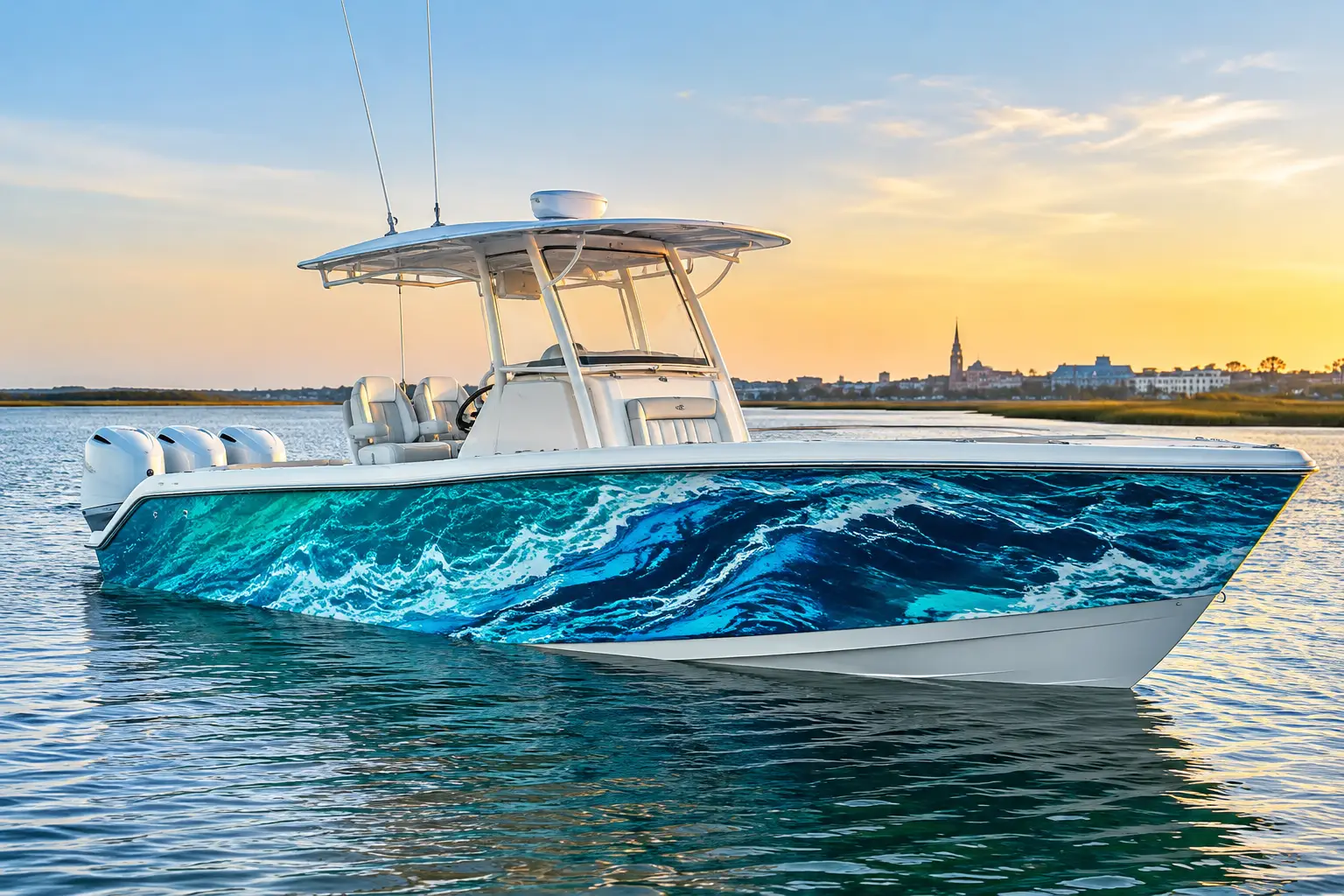
A boat can run perfectly and still disappear at the dock. Boat wraps change that fast. Whether you want a clean new hull color, a tournament-ready graphic package, a bold business presence, or a boat name with real personality, a professionally installed wrap gives your vessel a look people remember from the marina to the open water.
For Charleston boat owners, appearance is not a minor detail. Your boat is part weekend escape, part family gathering spot, and often part of your identity on the water. It also faces serious conditions: salt spray, strong sun, humidity, dock contact, fishing gear, and the occasional rushed launch. The right marine wrap needs to look sharp while standing up to the way you actually use your boat.
What Can Boat Wraps Change?
A marine wrap can be as subtle or as loud as you want it to be. Some owners use a full hull wrap to replace a dated gelcoat color with matte black, deep blue, metallic gray, or a custom shade that makes the boat feel brand new. Others choose side graphics, stripes, transom graphics, registration accents, or a custom boat name that gives the vessel a finished, personal look.
The best scope depends on the boat and the goal. A center console with tired graphics may only need updated side accents and lettering. A fishing boat headed for tournaments may call for a complete design with sponsor-ready space, aggressive color blocking, and visible identification. A pontoon boat can become a true gathering-place centerpiece with a refreshed exterior that fits its owners’ style.
For businesses that work on the water, wraps can also turn a vessel into a moving local billboard. Charter operators, waterfront restaurants, marine contractors, real estate teams, and tourism brands can use clean, legible graphics to make their name visible where traditional advertising cannot follow.
Why a Wrap Often Beats a Repaint
Paint has its place, especially when a hull needs structural repair or a complete restoration. But a marine vinyl wrap is often the smarter move when the goal is a dramatic visual update without committing to a permanent paint job.
A wrap offers more design freedom. Detailed patterns, gradients, logos, textures, camouflage, carbon-fiber effects, and full-color artwork are all possible without the cost and permanence of a custom paint process. It can also help shield the original finish from normal exposure, light scratches, and minor wear in wrapped areas.
That does not mean a wrap is magic armor. Vinyl will not cover major cracks, severe oxidation, loose paint, or damaged gelcoat and make those problems disappear. Surface preparation matters. If the hull is not clean, stable, and smooth enough for the material to bond properly, the first step may be correcting the underlying issue.
A quality boat wrap is also removable when its useful life is over or your style changes. That flexibility matters to owners who may sell, trade, rebrand, or simply want a different look a few seasons from now.
Design for the Water, Not Just the Screen
A strong boat design has to work at a distance. What looks impressive on a computer monitor can become unreadable once the boat is moving across the harbor. That is why the best marine graphics use deliberate contrast, properly sized lettering, and visual elements that follow the boat’s body lines instead of fighting them.
Boat names deserve the same attention. A name can be refined, funny, family-focused, or downright loud, but it should be easy to read from another dock or passing boat. The transom is a natural focal point, while side graphics can carry color, personality, and branding down the length of the hull.
If the boat represents a company, keep the message focused. A business name, logo, phone number, and simple service description can do more work than a crowded layout full of small text. On the water, there is no time for anyone to squint through a paragraph. Make the brand recognizable first, then make it memorable.
The Marine Details That Affect Your Wrap
Boats are not flat-sided delivery vans, and that is exactly why a marine project should be planned around the vessel itself. Hull shape, length, railings, rub rails, cleats, vents, decals, fuel fills, transom features, and trailer setup all affect the design and installation process.
Before a boat wrap begins, the project should be scoped around the exact make, model, year, and desired coverage. Photos are helpful, but accurate dimensions and close views of the application area make planning far more reliable. A 22-foot center console, a wake boat, a bay boat, and a pontoon may all be similar lengths, yet require very different design and installation approaches.
Condition matters just as much as size. The surface should be washed thoroughly and free of wax, silicone products, heavy oxidation, and contaminants. Fresh bottom paint, repairs, or gelcoat work may need appropriate cure time before wrapping. If hardware needs to be removed or access is limited, that should be discussed before the installation date rather than discovered when the boat arrives.
Choosing the Right Coverage Level
Not every project needs a full wrap. The right choice comes down to your budget, your boat’s current condition, and what you want people to notice first.
A full hull wrap delivers the largest transformation and is ideal for major color changes, custom artwork, or a branded charter vessel. Partial wraps focus attention on selected portions of the boat, such as the sides or transom, while controlling cost. Boat names and lettering offer a clean, high-impact upgrade for owners who want a personalized finish without changing the entire hull.
There is also value in planning the wrap around future changes. If you expect to add a new T-top, change sponsors, update a charter brand, or sell the boat within a couple of years, a modular design may make more sense than one large, all-encompassing graphic package.
Care Makes the Finish Last
After installation, regular care protects the look you paid for. Rinse saltwater from the wrapped areas after use when possible, especially around edges and hardware. Use mild soap, soft cloths, and non-abrasive washing methods. Harsh solvents, aggressive brushes, and high-pressure water directed at seams or edges can shorten the life of the vinyl.
Storage also makes a difference. Covered storage and routine cleaning reduce the constant sun and salt exposure that Charleston boat owners know well. A wrap is built for marine use, but every boat lives differently. A vessel stored on a lift near open water needs a different maintenance rhythm than one trailered and stored under cover.
If you spot an edge lifting, a cut, or damage from a dock encounter, address it early. Small repairs are easier before moisture, debris, or repeated washing works its way underneath the material.
Start With the Boat You Have and the Look You Want
The most successful boat wraps begin with a clear goal: restore a tired-looking hull, create a signature boat name, build a standout fishing rig, or put a business in front of Charleston’s waterfront audience. From there, the design, coverage, material, and installation plan can be built around your exact vessel instead of forcing a generic package onto it.
Charleston Wraps helps boat owners turn those ideas into made-to-fit marine graphics that look right at the dock and even better underway. Bring the boat details, a few visual references, and an honest picture of how you use it. The result should feel like it was always meant to be on your boat.