
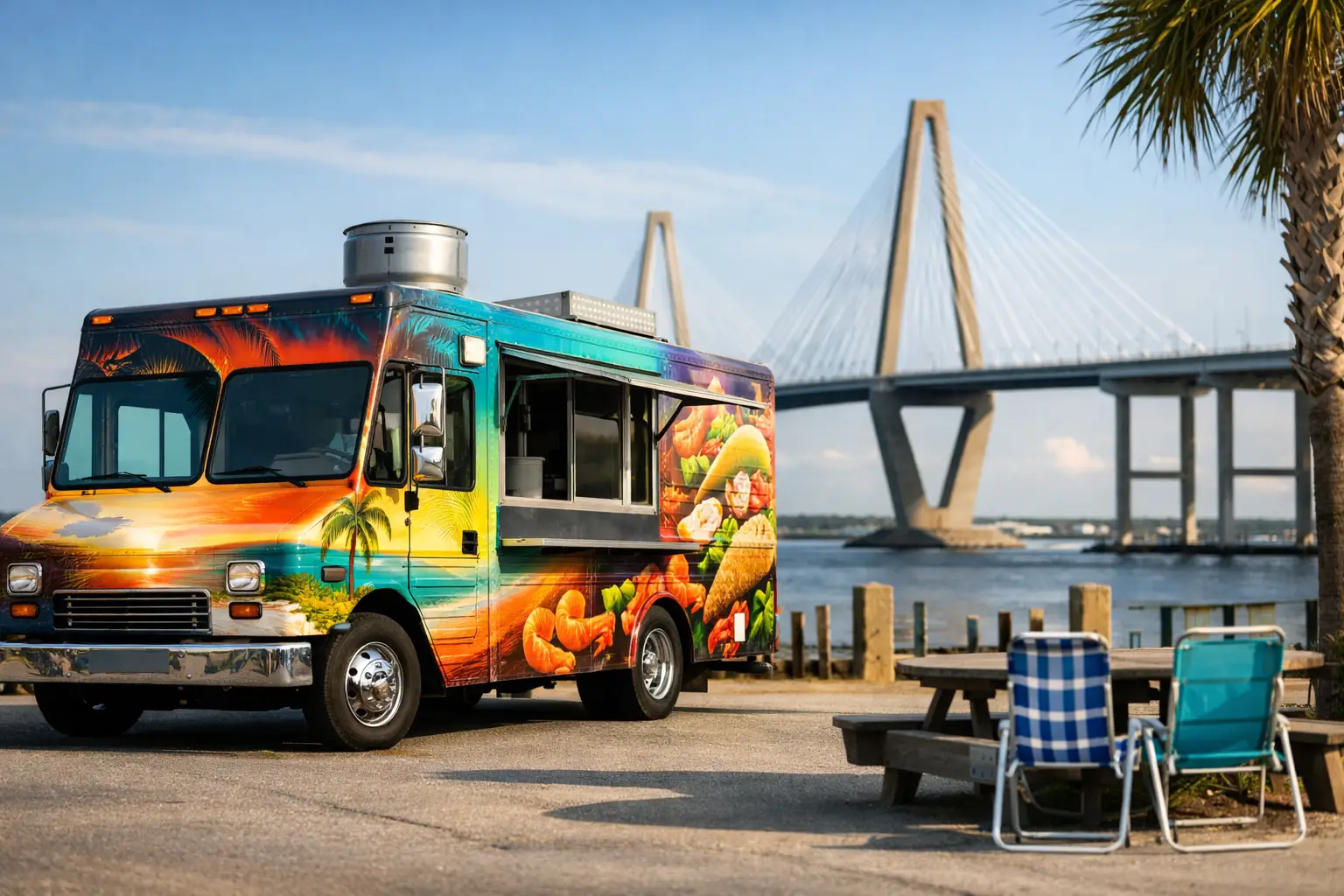
A food truck vinyl wrap has a job to do before the first order reaches the window. It needs to make hungry people look up, understand what you serve, remember your name, and feel confident enough to step in line. In a market packed with brewery events, wedding venues, downtown lunch crowds, and weekend festivals, your truck cannot afford to blend into the parking lot.
A great wrap does more than make a mobile kitchen look polished. It turns every route, setup, curbside stop, and event appearance into a high-visibility brand impression. For Charleston food-service operators, that means your truck keeps promoting the business long after the lunch rush ends.
Why a Food Truck Vinyl Wrap Is Worth the Investment
Food trucks already have something most businesses spend heavily to create: mobility. Your brand travels through high-traffic areas, parks outside offices, appears at private events, and becomes part of the energy at local markets and festivals. A professionally designed wrap makes those miles count.
Commercial vehicle wraps can generate an estimated 30,000 to 70,000 daily views, depending on where and how often the vehicle travels. A food truck may not be on the road all day, but it often spends hours parked where foot traffic is concentrated. That creates repeated exposure among people who live, work, and eat nearby.
The payoff is not limited to a single transaction. A clear, memorable truck makes it easier for past customers to recognize you when they see a social media post, event calendar, or catering announcement later. It also gives guests something worth photographing. When people share a picture of your food or your setup, a strong visual identity keeps your name in the frame.
Paint is permanent, expensive to revise, and less forgiving when your concept changes. Vinyl gives food truck owners more flexibility. You can build a complete branded exterior, add bold service-side graphics, refresh an older truck, or create a look that supports a new menu launch without committing to a permanent repaint.
What Makes Food Truck Vinyl Wraps Work
The strongest food truck graphics are not simply the loudest. They are designed for quick recognition from a distance, then reward customers who get close enough to read the menu and order. That balance starts with knowing what absolutely needs to be seen.
Lead With the Name and the Food
A passerby should be able to answer two questions in a few seconds: What is this truck called, and what kind of food does it serve? Your business name, core cuisine, and logo deserve priority placement. If your truck serves smash burgers, lowcountry seafood, tacos, barbecue, coffee, or dessert, make that message immediate.
A clever brand name is valuable, but it should not force customers to guess what is on the menu. A name paired with a short descriptor can solve the problem cleanly. For example, a logo may carry the personality while a simple line such as “Wood-Fired Pizza” or “Coastal Seafood” provides instant clarity.
Design for Motion and the Service Line
Your truck is viewed from several angles: passing traffic, pedestrians approaching from a distance, people standing in line, and guests taking photos from the service side. Side panels tend to deliver the biggest visual impact, but the rear can be valuable when the truck is parked or traveling through traffic.
The service window needs special consideration. Menu boards, payment signage, pickup instructions, condiment areas, and window hardware can compete with your design. A wrap should frame the ordering experience rather than bury it in visual noise. The best layouts leave room for the operational details that keep a busy line moving.
Avoid putting critical copy too close to door seams, hinges, vents, handles, panel breaks, or the edges of the serving window. A designer who understands vehicle wraps will account for these obstacles before production, not after the graphics are already printed.
Use Color With Purpose
Color can signal flavor, energy, quality, and personality before a customer reads a word. Bright colors can work beautifully for playful concepts, frozen treats, or street-food brands. Rich neutrals, deep greens, black, cream, or metallic accents may better suit a premium coffee, seafood, or chef-driven concept.
The trade-off is readability. A wrap packed with gradients, illustrations, patterns, and small text may look exciting up close but disappear from across the street. High contrast and generous spacing almost always outperform clutter. Your food photography should also earn its place. One bold, appetizing hero image can be more effective than a collage of every menu item.
Choosing the Right Wrap Scope
Not every food truck needs a full wrap, and not every partial wrap delivers enough impact. The right choice depends on the truck’s condition, your budget, the amount of existing paint or body color you want to retain, and how visible the vehicle is during normal operations.
A full wrap covers most painted exterior surfaces and creates the most complete brand transformation. It is the right fit when you want a completely new look, when the truck has mismatched panels or faded paint, or when the vehicle functions as a central part of your marketing strategy.
A partial wrap combines printed vinyl with the existing vehicle color. This can be an effective option when the paint is in good condition and naturally works with the brand palette. Large logos, bold side graphics, a service-window treatment, and rear-door branding can still produce a strong result. The key is making the partial design look intentional, not like a few decals were added as an afterthought.
Cut vinyl lettering and spot graphics are useful for simpler needs, such as adding a logo, website-free contact details, required business information, or a menu category. They are not always enough for a truck that needs to stand out at crowded events, but they can be the right move for a newer operator testing a concept or working within a narrow launch budget.
Build for Heat, Weather, and Real Food Truck Use
A food truck works hard. It faces road debris, summer heat, rain, coastal humidity, repeated washing, grease in the air, and the daily wear of doors, latches, and service operations. Material quality and installation technique matter because a wrap is only as good as the surface preparation and finish behind it.
Charleston conditions add another layer of consideration. Sun exposure can be intense, and coastal environments are hard on exterior surfaces. Premium wrap films and properly managed installation help preserve color and adhesion, but no graphic is maintenance-free. Regular hand washing with appropriate products, prompt cleanup of grease or fuel spills, and careful pressure-washing habits help keep the finish looking sharp.
Before wrapping, the truck should be clean, dry, and structurally ready. Vinyl is not a repair product. It will not fix rust, loose paint, deep dents, cracked bodywork, or failing clear coat. In fact, applying film over compromised paint can create problems later when the wrap is removed. Address repairs first, then give the graphics a stable surface to perform on.
Plan the Project Before the Truck Arrives
A better wrap project starts with better information. The truck’s make, model, dimensions, body style, window locations, serving-side layout, ladder access, vents, exterior equipment, and current condition all shape the design and installation plan.
Bring your logo files, brand colors, menu direction, and examples of visual styles you like. If you do not have a polished brand package yet, be honest about that early. It is easier to build a focused look from the beginning than to force an unfinished logo into a full vehicle layout.
You should also think beyond the truck itself. Will the same graphics appear on catering materials, staff shirts, table signage, menu boards, packaging, or a food trailer? Consistency makes a small business look established. It also makes your truck easier to recognize when customers see it again in a different setting.
Timing matters, too. Avoid scheduling a wrap installation immediately before a major festival or catering commitment. The truck must be available for measurement, design approval, production, surface preparation, and installation. Giving the process enough runway helps prevent rushed decisions and protects your operating calendar.
Make Your Truck the Sign People Remember
A food truck earns attention through its food, but the exterior gets the first chance to make the introduction. The right visual system can make an unfamiliar truck feel recognizable before the first customer reaches the window.
Charleston Wraps builds custom graphics around the actual truck, the actual service setup, and the way your brand needs to perform in the real world. Bring the menu, the idea, and the ambition. A clear plan and a strong food truck vinyl wrap can make every stop look like the place people were hoping to find.