
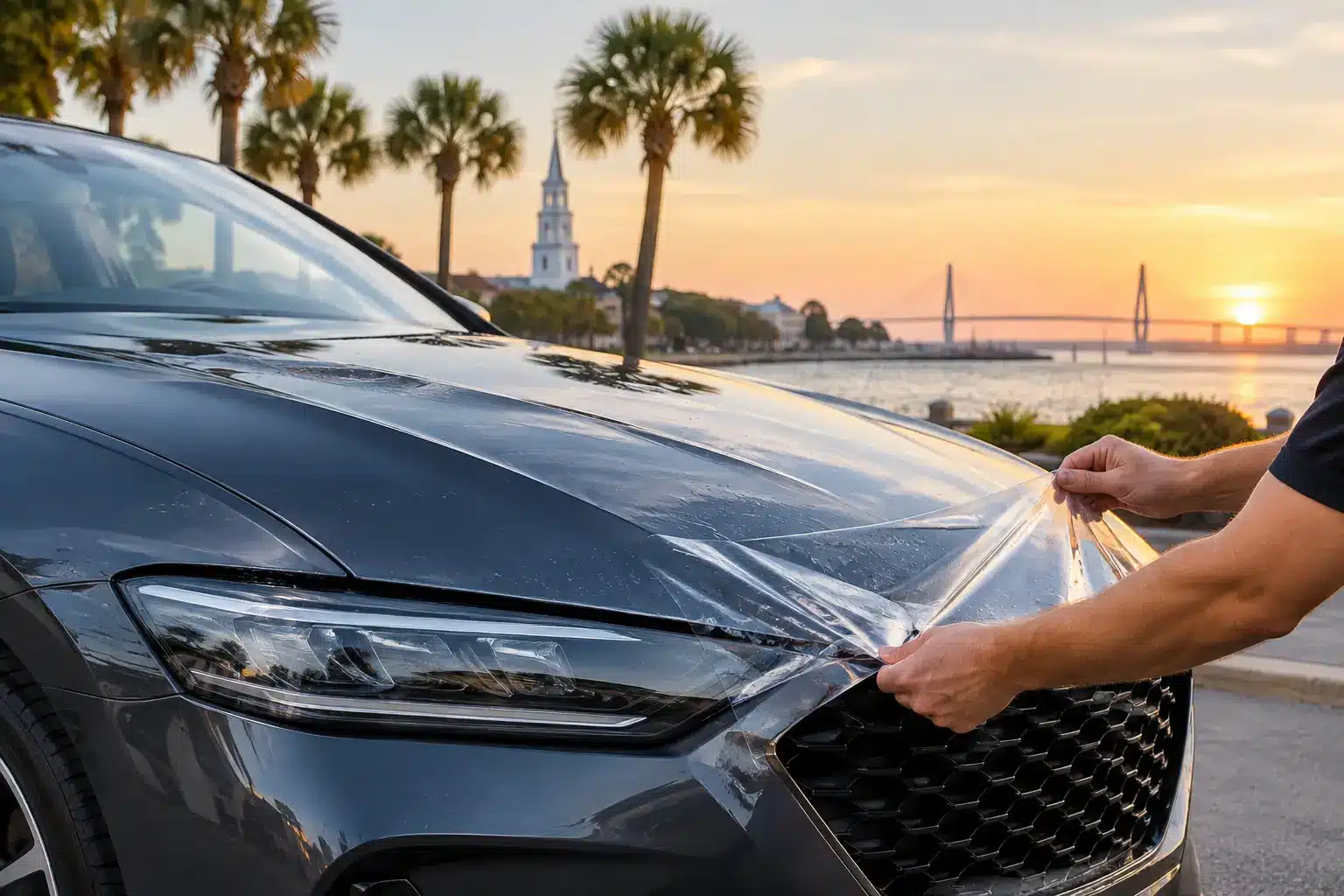
A fresh paint finish can take a beating long before a vehicle looks old. Loose gravel on I-26, sand near the coast, construction debris, tight parking lots, and everyday highway miles all leave their mark. This protective film coverage guide helps Charleston drivers choose paint protection film coverage that makes sense for how, where, and how often they drive.
Paint protection film, often called PPF or clear bra, is a transparent urethane film installed over painted surfaces. It is designed to absorb the abuse that would otherwise reach the clear coat: rock chips, light scratches, road grime, bug splatter, and minor scuffs. The right coverage is not always the most coverage. It is the coverage that protects the areas your vehicle actually puts in harm’s way.
Start With Your Driving Reality
Before choosing a package, consider the miles your vehicle sees. A garage-kept weekend car that stays around downtown Charleston has different needs than a daily-driven truck commuting through construction zones or a luxury SUV making frequent trips to Kiawah, Mount Pleasant, and beyond.
Vehicle shape matters, too. Low front bumpers, wide fenders, angular hoods, and flared rocker panels tend to collect debris. Trucks and SUVs sit higher, but their leading edges, lower doors, and bedsides still see plenty of abuse. If you regularly drive behind commercial vehicles, take rural roads, park near busy job sites, or travel on the highway, high-impact coverage earns its keep quickly.
Your ownership plan should also guide the decision. Drivers who trade vehicles every few years may choose targeted protection to preserve curb appeal and resale condition. Owners keeping a vehicle for the long haul often see value in broader coverage because small chips and worn edges add up over time.
Protective Film Coverage Guide: Your Main Options
Partial Front Coverage
Partial front coverage generally protects the front bumper, a portion of the hood and front fenders, plus mirror caps. It is a practical entry point for drivers who want to protect the leading edge of the vehicle without covering every painted panel.
This option works well for lower-mileage vehicles, leased cars, and owners who mainly want help with the most common chip zones. The trade-off is straightforward: the film edge may be visible on the hood and fenders at certain angles, especially on darker paint or when the vehicle needs washing. It also leaves the uncovered portion of those panels exposed.
Full Front Coverage
Full front coverage typically includes the complete front bumper, full hood, full front fenders, mirror caps, and headlights. For many daily drivers, this is the sweet spot. It protects the surfaces that receive the most direct impact while keeping film edges wrapped around panel boundaries rather than across the middle of the hood or fenders.
A full front is a strong choice for performance cars, new trucks, premium SUVs, and vehicles that see regular highway miles. It also makes sense for owners who want a cleaner, more finished look without committing to full-vehicle PPF.
High-Impact Add-Ons
Some areas deserve attention even when they are not part of a standard front package. Rocker panels are a prime example. Tires throw sand, gravel, and road debris backward into these lower sections, creating the rough, peppered finish many drivers notice behind the front wheels.
Door edges, door cups, rear wheel arches, luggage areas, and the top of the rear bumper can also benefit from targeted film. These small pieces are especially useful for family vehicles, work trucks, and SUVs that regularly haul gear, groceries, tools, coolers, or sports equipment. A good coverage plan is not just about dramatic rock chips. It should also account for the repeated contact points that make a newer vehicle look tired early.
Full Vehicle Protection
Full-vehicle PPF covers every painted exterior panel. It is the top-tier choice for vehicles with high-value factory paint, custom paintwork, rare finishes, collector value, or a long-term ownership plan. It is also ideal for drivers who simply want the confidence to use their vehicle without treating every highway trip like a risk assessment.
The biggest benefit is consistency. Every painted panel receives the same defense, and there is no question about where protection stops. The investment is greater, so full coverage is not necessary for every vehicle. But for exotic cars, luxury vehicles, heavily customized builds, and prized weekend machines, it can be the right call from day one.
Match Coverage to Your Vehicle Type
A sports car usually needs front-end protection first. Its low stance places the bumper, hood, and front fenders directly in the path of road debris. Full front coverage with rocker-panel protection is often a smart starting point.
For trucks, focus on the front bumper, hood, fenders, mirrors, rocker panels, and areas around the bed that take regular abuse. Contractors and fleet owners may put thousands of miles on a truck while visiting jobsites, suppliers, and customers. That kind of use calls for protection that supports a professional appearance, not just a polished showroom look.
SUVs and family vehicles benefit from front-end coverage plus rear-bumper protection and door-edge protection. They face the same highway debris as any other vehicle, then add car seats, strollers, beach gear, and constant loading to the mix.
If your vehicle has a custom vinyl color change or printed graphics, paint protection film can also be installed over certain wrap applications. This can add defense for high-wear areas, but the film, wrap material, surface condition, and installation timing all need to be evaluated first. A custom solution is better than assuming every material combination should be treated the same way.
Clear, Matte, or Satin Film?
Clear gloss PPF is the most common choice because it preserves the factory appearance while adding protection. On glossy paint, quality clear film is designed to blend in and keep the original color and shine front and center.
Matte or satin PPF changes the visual result. It can give a glossy vehicle a smooth satin appearance while protecting the paint underneath. This is a popular option for owners who want a custom finish without permanently repainting the vehicle. It does require a deliberate decision: once a satin film is installed on only part of the vehicle, the finish difference will be obvious. For a true transformation, broader coverage is usually the better route.
What PPF Does Not Replace
Paint protection film is tough, but it is not a force field. A hard enough impact can still damage paint, dent a panel, or tear the film. PPF also does not replace proper washing, safe drying methods, or routine care. Dirt and contaminants should not be allowed to sit on the surface for extended periods, particularly in Charleston’s heat, humidity, and coastal conditions.
It also will not correct existing damage. Chips, deep scratches, faded paint, and poor prior repairs may remain visible under a clear film. The best results start with clean, well-prepared paint. If correction or touch-up is needed, address that before installation so the finished vehicle looks as sharp as it is protected.
How to Choose the Right Coverage Plan
Start by identifying your highest-risk panels, then decide how much visual continuity matters to you. A commuter vehicle may need a full front and rocker panels. A weekend Porsche may justify full coverage. A work truck may be best served by practical high-impact protection that preserves a clean, credible look at every customer stop.
During a consultation, bring details that affect the recommendation: vehicle year, make, model, paint color, mileage, daily route, parking situation, and whether the vehicle already has a wrap or aftermarket paintwork. Photos of existing chips or wear can be useful, too. Charleston Wraps can help translate that real-world use into a coverage plan built around your vehicle instead of a one-size-fits-all package.
The goal is simple: protect the panels that take the hit, preserve the finish you paid for, and keep your vehicle looking ready for the next mile, meeting, weekend drive, or trip to the water.